


By Carmelo Garcia – Local Democracy Reporter
Concerns have been raised that job cuts to health jobs in Gloucestershire may have been premature as integrated care board mergers (ICBs) have been put on hold.
Health chiefs decided to cluster the organisations which commission health services, after NHS England ordered that running and programme costs be reduced by 50 per cent..
A decision was taken to cluster Gloucestershire with Bristol, North Somerset and South Gloucestershire.
And the previous chief executive of NHS Gloucestershire ICB said in July 2025 that job losses for the county were estimated to be between 150 to 200.
The new leadership has not yet revealed how many jobs have been cut since.
However, the Government has now called for a pause on the process while it considers wider local government reorganisation and devolution across England.
Jobs have been cut since, however the ICB say they are not able to provide the number of staff changes.
But they did confirm the timeline change of mergers has not impacted our restructure or plans around redundancies.
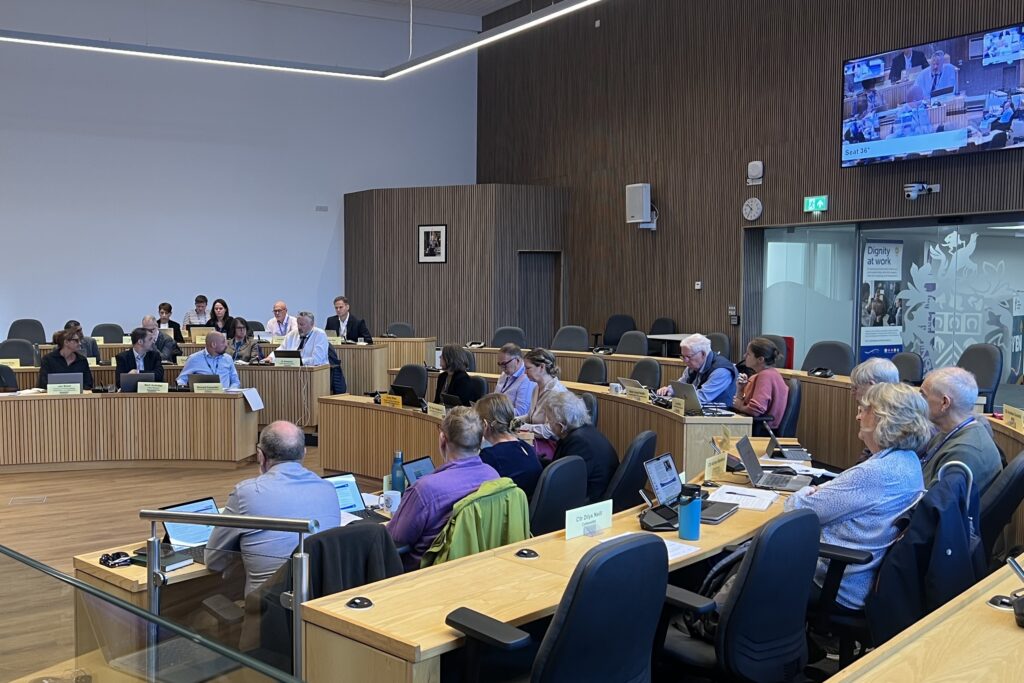
Councillors were given an update on the situation at today’s (October 13) health overview and scrutiny committee meeting at Gloucestershire County Council.
Conservative councillor Andrew Gravells (Abbeydale) asked about how the pause impacted the recent job cuts at the ICB in Gloucestershire.
“On the basis of what was going to go ahead, in terms of the merger as I understand it some staff were told they were no longer required and no longer had a job,” he said. “Is that the case?”
Mark Golledge, ICB place director for Gloucestershire, said when the announcement was made about changes in March last year changes were made changes to the running costs of ICBs.
He said all ICBs across the country have had to reduce these costs significantly. And he confirmed they have “gone through a period of organisational change over the last few months” which is impacting staff.
He said they are nearing conclusion around the process and said some staff are being moved into new roles and single teams.
“It has meant we have had to reduce our running costs in light of the national requirements,” he added.
Cllr Gravells said: “So on the basis of a merger which is now not proceeding, it’s been paused, some people who used to work just upstairs, do you remember them, on floor five I think it was, were told you no longer have a job, goodbye. Have I got that wrong?”
Mr Golledge said it “hadn’t worked exactly” as Cllr Gravells described.
He said a new structure has been presented and are recruiting to new roles. And went on to say while the ICBs are not creating a single organisation, at this time, they are clustered and now have teams working across each of the areas with strategic commissioning across the whole area.
Cllr Gravells asked how many staff who worked for Gloucestershire ICB no longer have a job on the basis of the proposed merger which has been paused.
“If there were none, please tell us. If there were people who lost their job, please tell us how many”.
Mr Golledge said he did not have the figures with him but is “happy to follow up with the committee afterwards”.
Cllr Gravells said it had been really difficult to get to the root of what is happening in the county.
“There have been staff redundancies or staff not required who no longer have a job as a result of this, thank you for confirming that.
“And I look forward to be being told how many lost their job prematurely”.
A spokesperson for NHS Gloucestershire and NHS Bristol, North Somerset and South Gloucestershire ICB cluster, said the pause has does not change the work being done across the cluster.
“While national discussions about devolution and future public sector arrangements have affected the timetable for our proposed merger, they have not changed the strong relationships, shared ways of working and common ambitions we have developed across our cluster and with partners,” a spokesperson said.
“The delay does not change the work we are doing across our cluster and we remain committed to working together to improve health outcomes, tackle inequalities, strengthen neighbourhood health services and ensure the best possible use of public resources for our local population.
“Our focus continues to be on delivering the priorities we share across our health and care systems.”