
Passing a driving test takes more than knowing how to operate a vehicle. The UK practical test assesses a specific set of skills, in a specific format, on roads that have their own quirks and challenges and most learners find that knowing the types of roads they will face gives them a meaningful edge. Preparing for a test has changed significantly in recent years, and the tools available to learners today are far more sophisticated than a DVD and a revision book.
Understanding What the UK Practical Test Actually Assesses
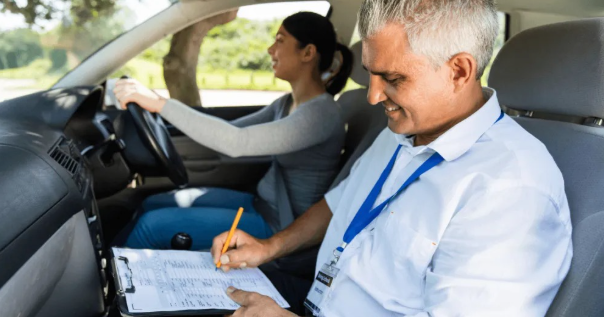
The DVSA practical driving test is structured around a defined set of competencies: vehicle safety questions, general driving ability, manoeuvres, independent driving following a sat-nav or road signs, and where applicable an emergency stop.
Candidates are assessed by a DVSA examiner using a standardised marking sheet, with faults classified as minor (driving faults) or serious and dangerous. Accumulating 16 or more driving faults results in a fail, as does a single serious or dangerous fault.
Understanding exactly what examiners assess and practising to meet that standard is what effective preparation actually means.
How an App for Driving Test Preparation Changes the Game
An app for driving test preparation helps learners build genuine familiarity with the roads used at their local test centre. This is not about memorising specific turns, examiners deliberately vary routes but about developing comfort and confidence on the types of roads, junctions, and hazards that appear most frequently in a given area.
Familiarity reduces cognitive load. When a learner already knows what to expect from a particular roundabout or a set of traffic lights with a short filter phase, they have more mental bandwidth available for technique rather than navigation anxiety.
The Science Behind Route Familiarity
Cognitive load theory explains why familiarity matters so much in skill-based assessments. When a task demands more mental resources than are available because the environment is unfamiliar, the pressure is high, and the evaluation is continuous, performance degrades.
Experienced drivers handle complex junctions automatically because the cognitive processing required has been reduced through repetition.
Learner drivers who are unfamiliar with the roads they will be assessed on must allocate additional mental resources to navigation uncertainty, leaving less available for the finer points of driving technique that examiners specifically assess.
Why You Should Download Driving Test Routes
When learners choose to download driving test routes for their local test centre, they gain access to maps and information about the roads examiners use most regularly.
Route information should be used in two ways: in lessons, by sharing the routes with your instructor and practising them specifically; and away from the car, through mental rehearsal of complex junctions and manoeuvres. Both approaches have well-documented performance benefits.
Sports psychology has used mental rehearsal as a tool for decades, and the underlying mechanism strengthening neural pathways through imagined repetition applies equally to driving.
What Good Preparation Apps Cover
Theory Test Practice
The multiple-choice component of the theory test covers the Highway Code, road signs, vehicle safety, and road law comprehensively. Effective apps use adaptive question banks that identify weak areas and focus practice accordingly, rather than presenting questions in a fixed sequence that hides the areas where the learner is least confident.
Targeted practice on weak areas consistently delivers better results than working through a generic bank from start to finish.
Hazard Perception
Hazard perception is a specific skill that improves significantly with targeted practice. Many candidates underestimate how much preparation this component requires, and it is one of the areas where learners most commonly underperform relative to their actual driving ability.
Good apps provide realistic clips with immediate feedback, allowing learners to calibrate their response timing accurately before the test rather than discovering the correct rhythm only after a failed attempt.
Getting the Most from Your Preparation Tools
The most effective use of an app for driving test preparation is as a complement to professional instruction rather than a replacement for it.
Share the information your app provides with your instructor. A good instructor will recognise the routes and be able to highlight the specific challenges each presents.
When you download driving test routes for your test centre, look for resources that are regularly updated for accuracy, as test centres periodically adjust the roads they use. Outdated route information is considerably less useful than current, centre-specific coverage.
When to Start and How to Structure Your Preparation
The point at which route-specific practice becomes most valuable is when you are broadly competent at the fundamental skills of driving and beginning to focus on test readiness.
Using route information too early before you have consistent control and safe observation habits means practising roads before you have the skills to learn from them effectively.
Most learners find the four to six weeks before their test date is the right window for focused route practice, combined with continued skills development across a broader range of road types and conditions.
Conclusion
Test day does not have to feel like stepping into the unknown. The more familiar and prepared you feel before you sit in that examiner’s car, the more confidently you will drive and confidence, within reason, translates directly into better technique and fewer errors. Test Routes App UK was built specifically to address the familiarity gap that many learners experience. If you are preparing for your practical test, using the right tools in the weeks leading up to it can make a real difference.
Author Name:
Virendra Patel
Virendra Patel shares expert insights on driving tests, learner preparation, and test centre guidance. His content helps new drivers feel more confident and informed on the road to getting their licence.